
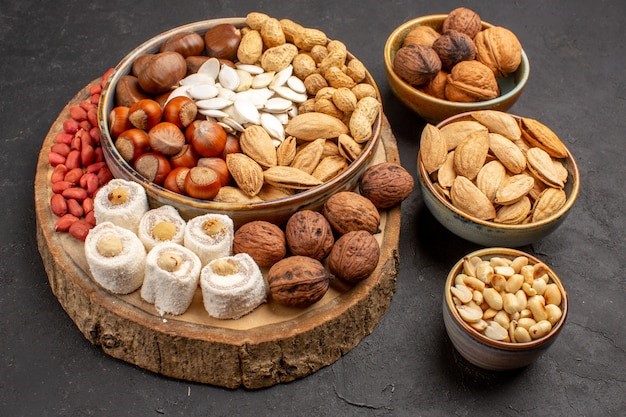
Nuts are a delicious and convenient snack suitable for various dietary choices, including keto and vegan diets. Despite their high-fat content, they offer numerous health benefits and can support weight management goals.
Nuts are loaded with healthy fats and calories, making them a great source of energy. Nuts are a rich source of dietary fiber, protein, vitamins and minerals which help protect your heart from plaque buildup. Nuts are also versatile and can be enjoyed as a healthy snack or used in cooking. In this blog, we’ll talk about the different types of nuts for good for health, nutrition in nuts and their benefits.
List of Healthy Nuts to Consume:
1. Almonds
Due to their flavor, remarkable nutrient profile, and affordable price, almonds are extremely popular. Almonds are one of the best high protein nuts. They can be consumed raw or roasted, and are frequently turned into almond milk, almond butter, and almond flour.
Vitamin E, a fat-soluble nutrient that serves as an antioxidant that protects your cells from oxidative harm, is particularly rich in these nuts. Additionally, this vitamin promotes cellular contact and immune function.

One small bowl or 28g of almonds contains
- Calories: 170
- Fat: 15 grams
- Protein: 6 grams
- Carbs: 6 grams
- Fiber: 3 grams
- Vitamin E: 45% of the RDA
- Magnesium: 19% of the RDA
- Manganese: 27% of the RDA
2. Pistachios
Pistachios are full of nutrients but lower in calories and fat than many other nuts. Vitamin B6 is one of many nutrients found in pistachios that your body requires for the immune system and nutrient metabolism.
The carotenoids lutein and zeaxanthin, as well as anthocyanins, flavonoids, and proanthocyanidins, which all have substantial antioxidant and anti-inflammatory properties, are among the many plant compounds that are abundant in these nuts (1).
One small bowl or 28g of pistachios contains
- Calories: 159
- Fat: 13 grams
- Protein: 6 grams
- Carbs: 8 grams
- Fiber: 3 grams
- Vitamin B1 (thiamine): 21% of the RDA
- Vitamin B6: 28% of the RDA
- Phosphorus: 11% of the RDA
3. Walnuts
The mineral copper, which your body requires to make enzymes involved in the synthesis of neurotransmitters and energy, is plentiful in walnuts. In addition, copper supports the growth of blood vessels and the immune system.
Walnuts have been shown to have heart-healthy qualities and may lessen heart disease risk factors, such as high blood pressure, LDL (bad) cholesterol, and lipid levels.
One small bowl or 28g of Walnut contains
- Calories: 185
- Fat: 18.5 grams
- Protein: 4 grams
- Carbs: 4 grams
- Fiber: 2 grams
- Copper: 50% of the RDA
- Magnesium: 11% of the RDA
- Manganese: 42% of the RDA
4. Cashews
Cashews go well with both savory and sweet foods because of their crunchy structure and creamy mouthfeel. They can be consumed fresh, roasted, or in nut butter form.
These nuts are an excellent source of protein, vitamin K, magnesium, and manganese, all of which are necessary for the maintenance of healthy bones.
One small bowl or 28g of Cashews contains
- Calories: 155
- Fat: 12 grams
- Protein: 5 grams
- Carbs: 9 grams
- Fiber: 1 gram
- Vitamin K: 8% of the RDA
- Magnesium: 20% of the RDA
- Manganese: 20% of the RDA
5. Pecans
Pecans are mild nuts that are popular for making cakes, pies, salads, and grain dishes. Pecans are rich in fiber, healthy fatty acids, vitamins, and minerals, just like other nuts.
They are an excellent source of zinc, a mineral crucial for growth and development, wound healing, DNA synthesis, and immune system operation (2).
One small bowl or 28g of Pecans contains
- Calories: 201
- Fat: 21 grams
- Protein: 3 grams
- Carbs: 4 grams
- Fiber: 3 grams
- Vitamin B1 (thiamine): 11% of the RDA
- Zinc: 13% of the RDA
- Manganese: 48% of the RDA
6. Macadamia nuts
With one of the highest fat contents, macadamias are frequently used in recipes for both savory and sweet dishes to add flavor and texture.
Despite being infamous for having a lot of fat, macadamia nuts are not to be feared. They are the richest nut supply of heart-healthy mono-unsaturated fats, and as a result, they aid in controlling cholesterol and heart disease risk factors. They are an excellent source of fiber and contribute significantly to the intake of minerals like magnesium, calcium, and potassium.
One small bowl or 28g of Macadamia nuts contains
- Calories: 204
- Fat: 21.5 grams
- Protein: 2 grams
- Carbs: 4 grams
- Fiber: 2.5 grams
- Vitamin B1 (thiamine): 28% of the RDA
- Manganese: 51% of the RDA
- Copper: 24% of the RDA
7. Hazel Nuts
Hazelnuts are rich sources of nutrients such as vitamin E. Hazelnuts are the second-richest nut source of mono-unsaturated fat, which is good for the heart. They are also anti-inflammatory and can help with blood lipid management. They are effective at boosting vitamin E status because they are abundant in vitamins and minerals, particularly in the elderly.
One small bowl or 28g of Hazel nuts contains
- Calories: 178
- Fat: 17 grams
- Protein: 4 grams
- Carbs: 5 grams
- Fiber: 3 grams
- Vitamin E: 28% of the RDA
- Magnesium: 11% of the RDA
- Manganese: 76% of the RDA
8. Peanuts
Although they formally fall under the legume family, tree nuts and peanuts have similar nutrient profiles, health advantages, and culinary applications.
In addition to being rich in folate, a B vitamin that is particularly crucial during pregnancy due to its function in fetal and placental development, peanuts are also a good source of plant protein, which can help you feel full.
Additionally, research suggests that diets high in nuts, such as peanuts, may be good for cardiac health (3).
One small bowl or 28g of Peanuts contains
- Calories: 162
- Fat: 13.5 grams
- Protein: 7 grams
- Carbs: 6 grams
- Fiber: 2.5 grams
- Vitamin B3 (niacin): 23% of the RDA
- Vitamin B9 (folate): 17% of the RDA
- Magnesium: 12% of the RDA
9. Chestnuts
Chestnuts are a well-liked and versatile nut that is low in fat and calories and a good source of nourishing antioxidants.
Chestnuts are by far the lowest fat and calorie nut. They are also high in fiber and starchy carbohydrates, and when consumed raw, they are an excellent source of vitamin C. Despite having less protein than other almonds, they can be ground to make gluten-free flour that can be used in cakes and other baked goods.
One small bowl or 28g of Chestnuts contains
- Calories: 59
- Fat: 3.1 grams
- Protein: 0.5 grams
- Carbs: 13.9 grams
- Fiber: 1.5 grams
- Vitamin C: 23% of the RDA
- Vitamin B9 (folate): 17% of the RDA
Conclusion
Nuts offer multiple benefits to the body and can be included in daily consumption. Despite misconceptions that nuts should be avoided on low-calorie diets, they are nutrient-dense and make excellent snacks for weight loss efforts.
Consuming nuts regularly can enhance health by lowering the risk of diabetes and heart disease and reducing cholesterol and triglyceride levels. Despite their calorie density, nuts, as a nutritious high-fiber option, may even facilitate weight loss. When consumed in appropriate portions, nuts contribute to a delicious and balanced diet.
FAQs
1. What are the nutritional benefits of nuts?
Nutritional benefits of nuts include weight loss, antioxidant benefits, reduced inflammation, quality of sleep and fulfill nutrition requirement.
2. What are the top 3 healthiest nuts?
The top 3 healthy nuts are almonds, walnuts and Brazil nuts.
3. Are nuts good for skin?
Yes, nuts are good for skin as they provide essential vitamins and minerals for the skin.
4. Is it OK to eat nuts daily?
Yes, it is ok to eat nuts every day. Infact, many health experts recommend eating nuts as a snack every day.
5. What nuts are good for the brain?
Nuts such as almonds, macadamia and walnuts are good for the brain.



very informative